Volunteer Engagement Model
Consultation closed on 30 June 2026. The project team released the consultation report on 31 August 2026 which includes the key themes summary.
Consultation Report: You Told Us
During the Volunteer Engagement Model (VEM) consultation, from 30 March to 30 June, we sought feedback from volunteers and other stakeholders on all aspects of the proposed model and agreements. Thank you to everyone who took part. Your collective feedback will directly inform revisions to the agreements so they are clear, practical, workable and enduring.
You Told Us (Full Report)
You Told Us (One Pager)
In this short video update, we reflect on the Volunteer Engagement Model Consultation, sharing key themes from the feedback as well as next steps for the project. Click below to view the video now, or share it with your brigade at your next training night.
Proposed VEM Documents:
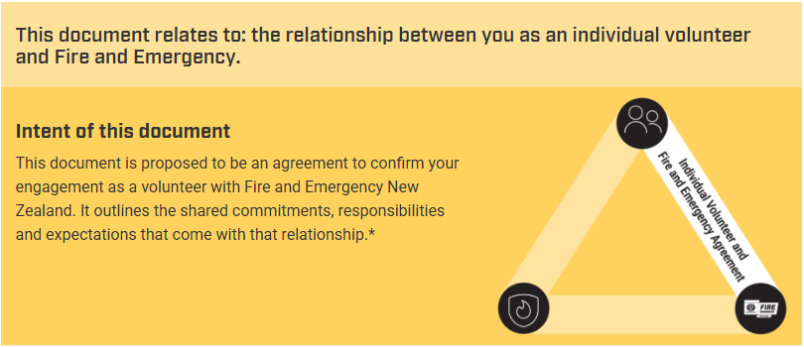
Proposed Individual and Fire and Emergency Agreement
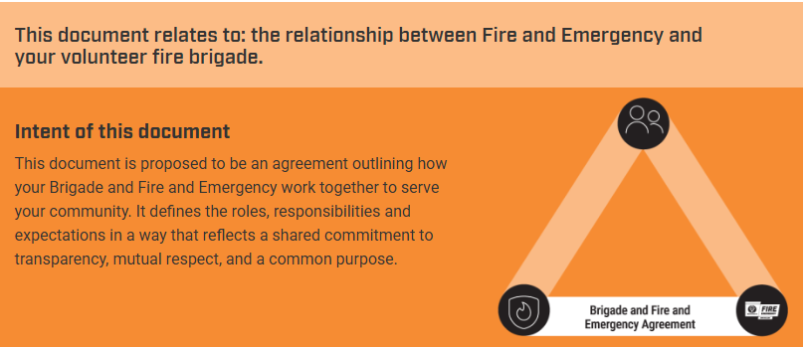
Proposed Brigade and Fire and Emergency Agreement
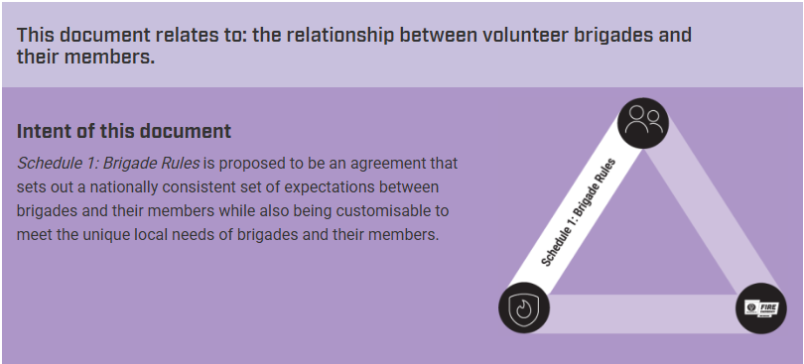
Proposed Schedule 1: Brigade Rules
Email - vem@fireandemergency.nz or connect@ufba.org.nz
Volunteer Engagement Model Project
Background
Volunteer agreements were inherited with the formation of Fire and Emergency in 2017. These agreements are inconsistent across the country, and we have not defined the foundation to support a relationship between volunteer brigades and Fire and Emergency. A previous attempt to address this gap was called the Agreements of Service and Model Rules project. The VEM project builds on this work. It is being co-designed between Fire and Emergency and the UFBA, and has been prioritised as a Strategic Implementation Programme (SIP) project for Fire and Emergency.
Purpose
This project aims to modernise volunteer agreements to better reflect the vital role of volunteers to keep our communities safe, while defining relationships and aligning with the Fire and Emergency New Zealand Act 2017. It also seeks to provide greater consistency and clarity about volunteer brigades’ connection to Fire and Emergency’s policies and procedures, all while preserving their independence and mana.
A key consideration for the team is that any proposed changes must meet the needs of all parties and be consulted on.
Scope of work for the project
The finalised scope for this project includes the following agreements, documents, and processes:
- Agreement(s) of Service or Constitution(s)
- Brigade Rules of Association (Model Rules)
- Brigade Leader (Controller, Chief Fire Officer, Officer in Charge,) and Deputies – Appointment Process and Letter of Appointment
- Volunteer Appointment Process and Letter of Engagement
The scope outlines the intent of this project and the key pieces of work it will focus on. It includes information about how this project relates to other work underway like the Eke Taumata programme.
You can read the scope of work here.
Your feedback and input into this mahi is important to us. The You Told Usreportsets out the key themes we heard through consultation along with representative comments from volunteers, Fire and Emergency employees, and Local Advisory Committees.
The project team can be reached by emailing volunteerengagementmodel@fireandemergency.nz
Or contact the UFBA team by emailing connect@ufba.org.nz
Project updates
The VEM project has now entered its drafting agreements phase. Project updates will be uploaded as the project progresses.
January 2026 - Information Sheet [PDF, 269 KB]
November 2025 - Information Sheet
April 2025 - Information Sheet
March 2025 - Information Sheet
Additional project resources and documents
Brigade composition document – This resource offers insights into brigade structures across the country, with links to resources on legal classifications and their implications.
Seeking your insights – key themes – This document themes and summarises insights gleaned through the Seeking Your Insights phase of the project.
Defining relationships document – This document lays out guiding principles for drafting the new agreements and succinctly summarises our needs in each relationship from the perspectives of the individual volunteer, the volunteer brigade and Fire and Emergency.
Summary of out-of-scope feedback – During the Seeking Your Insights phase, the project received valuable feedback that we have determined is out of scope for this project. Out-of-scope feedback has been summarised in this document and forwarded on to relevant teams.
What Say You -- Feedback collected via What Say You is still available for you to review at https://vem.wsy.nz .
You Told Us: VEM Consultation Report – You Told Us is a report summarising key themes that emerged through the consultation, with representative quotes from stakeholders.
Last modified: 31 August 2026